The garage is the surface that catches everything — oil drips from vehicles, brake dust, road salt tracked in for months, the dirt the rest of the property generates and then forgets about. It's also the surface almost nobody cleans, partly because it's out of sight and partly because it seems like a chore that wouldn't make a difference. It does.
What Builds Up on Your Garage Floor
- Oil and brake fluid drips: stain concrete permanently if left long enough
- Tire residue: a fine black rubber dust that coats the floor and tracks into the house
- Road salt: in winter climates, salt buildup accelerates concrete spalling
- Dirt and dust: from the property, from boots, from the cars themselves
- Mildew in damp garages: especially in corners that don't get airflow
The Cleaning Process
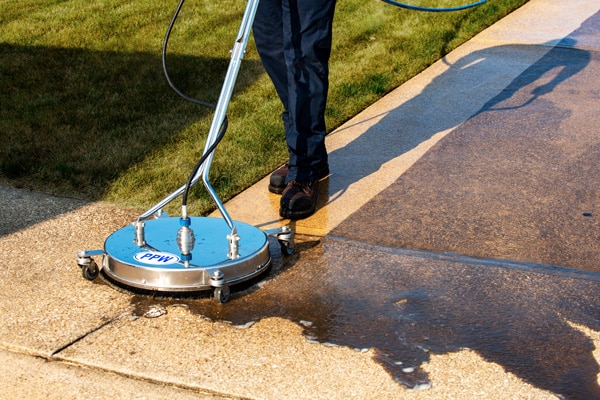
Garage floors usually get the same treatment as a heavily-stained driveway. We start with a degreaser pre-treatment on visible oil and grease spots, then pressure wash with a surface cleaner for an even finish across the whole floor. For garages with significant oil staining, multiple degreaser applications may be needed to lift everything fully.
The Garage Exterior Too
The exterior face of the garage — the wall the door is in, and the trim around the door — collects road grime, exhaust film, and biological growth like any other exterior surface. A soft wash on the garage exterior at the same time as the floor cleaning takes care of both as part of a single visit.
After Cleaning: Sealing or Epoxy
A clean garage floor is the ideal starting point for a concrete sealer or a full epoxy coating. Both protect against future oil and salt damage and make the floor much easier to clean going forward. Even without coating, a freshly cleaned floor stays cleaner longer because there's nothing built up to compound new stains.
A clean garage actually becomes useful again. Workshop space, gym space, storage you can find things in — all of it depends on a floor that doesn't look (or feel) like a parking lot.