Concrete looks like the toughest surface on a property — and it is, in terms of structural load. But chemically, it's porous, which means dirt, oil, biological growth, and salt soak into it rather than just sitting on top. The dirt you see is what's on the surface; underneath, things are happening you can't see.
What's Damaging Your Concrete Right Now
- Algae and mildew: hold moisture against the surface and slowly erode the cement paste between aggregate
- Road salt: penetrates into the pores and causes spalling (surface flaking) over freeze-thaw cycles
- Oil and chemical drips: soak in and weaken the cement over time, plus permanently stain
- Plant roots and weeds: any organic growth in joints or surface cracks expands them
- Standing water: prolonged moisture exposure accelerates all of the above
Why Annual Cleaning Is a Maintenance Decision, Not a Cosmetic One
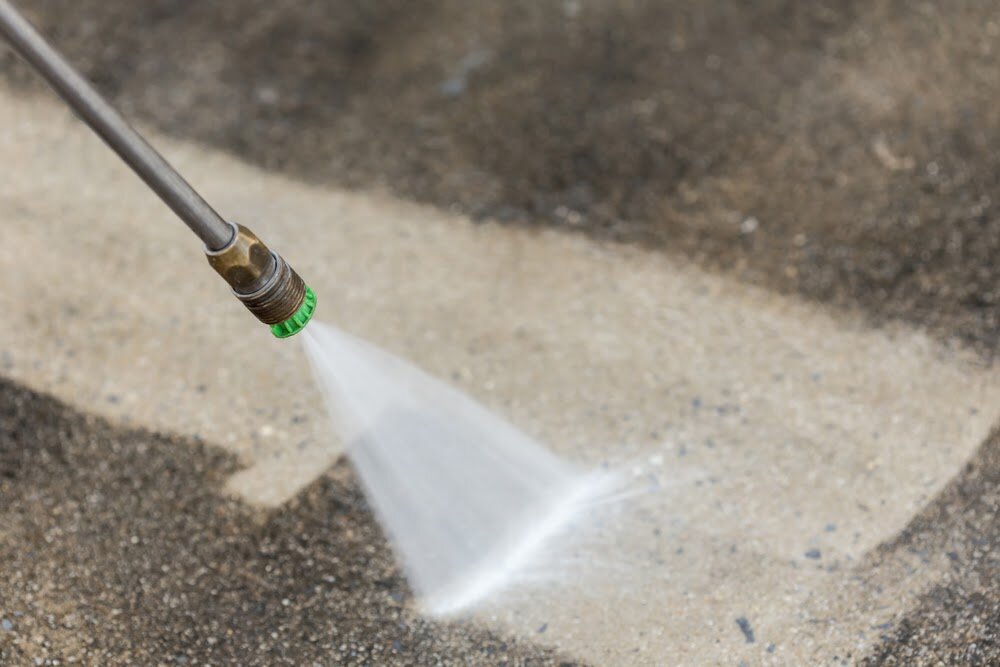
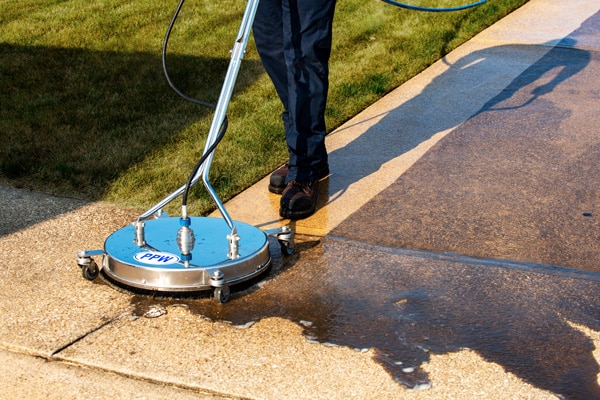
Pressure washing concrete annually does more than make it look better. It removes the moisture-trapping biological growth before it digs deeper, lifts oil and salt before they fully penetrate, and clears the surface so any small cracks or damage can be seen and addressed. It's the cheapest, easiest concrete maintenance you can do, and it postpones the much more expensive resurfacing or replacement.
Surfaces That Benefit Most
- Driveways and aprons
- Sidewalks and walkways
- Pool decks
- Patios and back stoops
- Foundation walls and concrete-block exteriors
- Garage floors
- Commercial parking pads and loading areas
Sealing After Cleaning
For high-value concrete — new driveways, stamped or decorative concrete, pool decks — sealing after cleaning is the most cost-effective protection you can apply. A penetrating sealer fills the pore network so water, oil, and salt can't soak in. It also makes subsequent cleanings much faster.
A concrete surface that's never been cleaned often holds the contamination of every season it's lived through. The first professional cleaning is usually a dramatic visual change.