A deck or patio is the single most-used outdoor surface on most properties — and the one most often cleaned badly. Wood gets blasted into furry-grained ruin. Composite gets etched by a held-too-close nozzle. Brick pavers lose their jointing sand. The cleaning isn't complicated; it's the matching of pressure to surface that matters.
Wood Decks
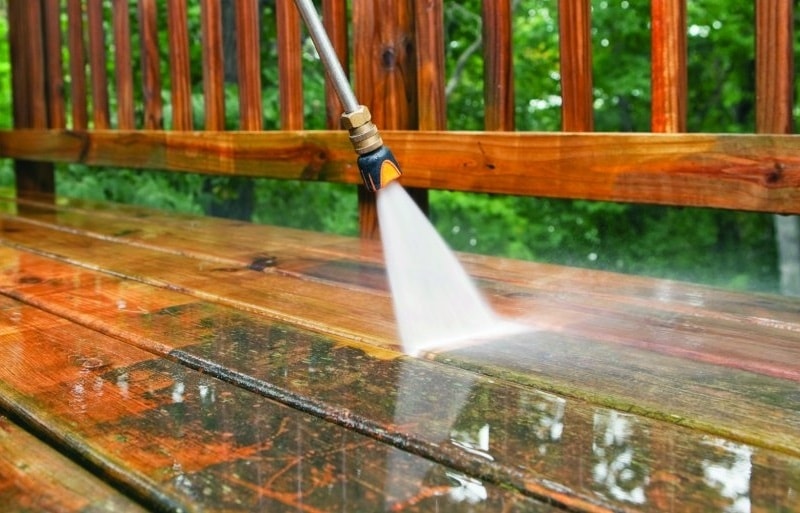
Wood — whether pressure-treated pine, cedar, or redwood — takes the lowest pressure of any common deck surface. The goal is to lift dirt, mildew, and gray weathering without raising the wood grain or driving water deep into the boards.
For wood we use:
- 600-1,200 PSI with a 25-40 degree fan nozzle
- A wood deck cleaner or brightener applied first to break down tannin stains and gray weathering
- Passes along the grain, with the nozzle kept moving
- 48-72 hours of drying time before any stain or sealer is applied
Composite and Trex Decks
Composite decking is tougher than wood but still has limits. Most composite manufacturers cap allowable pressure around 3,100 PSI with the nozzle held at least 8 inches from the surface. The most common composite damage we see is fan-pattern etching from a homeowner holding the nozzle too close. A composite-safe cleaning solution applied before pressure rinsing dramatically improves results — especially for the dark mildew staining that loves textured composite boards.
Concrete and Stamped Concrete Patios
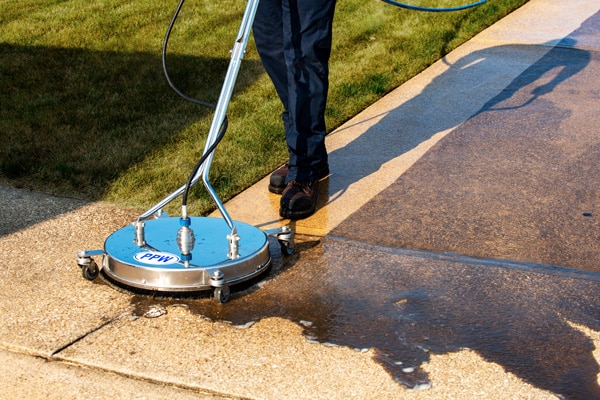
Standard concrete patios take pressure well — a surface cleaner gives even results across the whole slab. Stamped concrete needs more care: the texture traps debris and the decorative sealant can be damaged by excessive pressure. We use lower pressure with a fan nozzle on stamped surfaces.
Brick and Natural Stone
Brick and natural stone are durable but porous — biological growth gets deep into the surface and won't come out with pressure alone. The right approach is a soft-wash treatment first that kills the algae and mold at the root, then a moderate-pressure rinse to clear the debris. A penetrating sealer after cleaning slows re-soiling significantly.
Spring timing: clean your deck once temperatures are consistently above 50°F and before you want to use it. That gives any stain or sealer time to cure before heavy traffic resumes.